Your basket is empty
Looks like you haven't added anything to your basket yet




Mesh vs Solid Trays for High-Speed Ovens: Which Do You Need?
Solid and mesh trays solve two different problems, and picking the wrong one is the most common reason food comes out of a high-speed oven soggier than it should be. Both come in the same material for the same reason: these ovens use microwave energy alongside hot air, so metal trays aren't an option for everyday use, they can spark and damage the oven cavity. PTFE is what fills that gap, and the choice between a solid tray and a mesh tray is about what the food needs, not the material itself.
What a solid tray does
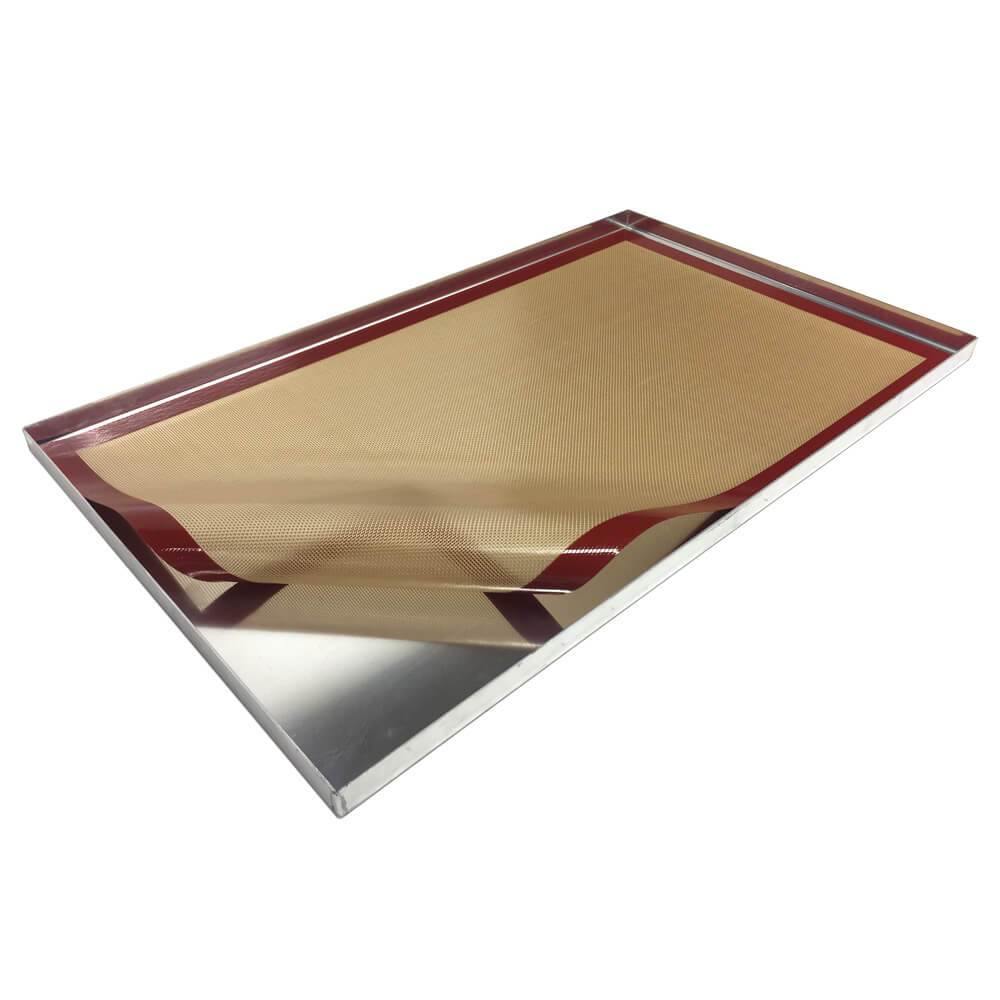
A solid PTFE tray's main advantage is containment. Any drips, spills or mess from what you're cooking stay in the tray rather than falling into the oven cavity, and a tray is a lot easier to clean than the inside of a Merrychef or Turbochef. That makes solid the better choice for stickier or messier food, and a solid general all-rounder if you want one tray that handles most things without much thought. It's also more stable than a mesh tray, and it suits food that only needs surface heat rather than crisping all the way round, a toastie is the clearest example, where you're really just melting the cheese on top. Our Merrychef and Turbochef solid trays are cut to the exact cavity dimensions of specific oven models, so they sit flush without gaps.
What a mesh tray does differently
An open mesh tray isn't a solid sheet with holes punched in it, it's a genuine open weave, and that changes how food cooks. Air can circulate underneath and reach all surfaces of the food, not just the top, which is what gives a crispier result than a solid tray tends to produce. Sogginess isn't a major issue with solid trays, but it's more common on solid than on mesh, since a solid base traps a bit more moisture underneath. For anything where a crispy exterior is the point, hash browns and baguettes are good examples, mesh is the better choice.
When to choose which
Here's the quick version.
| If you need | You want |
|---|---|
| Messier or stickier food | Solid |
| The oven cavity kept clean rather than the tray | Solid |
| Food that only needs top-side heat, like a toastie | Solid |
| A general-purpose, easy-to-clean option if you're not sure | Solid |
| A crispy exterior, hash browns, baguettes and similar | Mesh |
| A mixed menu | Both, rather than compromising on one |
Using them together
If you're cooking something with significant fat or moisture content on a mesh tray, placing it on a shelf above a solid tray catches whatever drips through, keeping the oven cavity clean without losing the airflow benefit underneath the food itself.
One handling note for solid trays
Solid trays are PTFE, and PTFE's non-stick coating is slippery by design, that's what makes it release food so well, but it also means product sitting on the tray can slide if you turn or move quickly straight out of the oven. Mesh trays don't have this issue in the same way, since the open weave gives food more to grip onto. Worth bearing in mind during a fast service where trays are being turned round rather than carried carefully.
Frequently Asked Questions
Which tray keeps the oven cleanest?
A solid tray. Drips, spills and mess stay contained in the tray rather than falling into the oven cavity, and a tray is far easier to clean than the inside of a Merrychef or Turbochef.
Is a solid tray or mesh tray better for a toastie?
Solid. A toastie only needs top-side heat to melt the filling rather than a crispy exterior all round, and a solid tray keeps things tidy if anything melts out the sides.
Does a mesh tray cook food slower than a solid tray?
No. Both are built for the same high-speed oven cooking times. The difference is texture, not speed: mesh keeps the underside of food crisp instead of trapping steam against it.
Can I use a mesh tray for anything with a lot of fat or liquid?
Yes, but place it on a shelf above a solid tray so drips are caught rather than falling into the oven cavity.
Is it easier for food to slide off a solid tray than a mesh tray?
Yes. Solid trays are PTFE, which is slippery by design, so product can slide if a tray is turned or moved quickly. Mesh trays give food more to grip onto, so this is less of an issue during fast-paced handling.
- Choosing a selection results in a full page refresh.