Your basket is empty
Looks like you haven't added anything to your basket yet




PTFE vs Silicone: Which Liner or Mat Do You Need?
Burnt-on mess stuck to a roasting tin, baking paper that curls up and won't stay flat, or a roll that runs out halfway through a batch, these are the everyday frustrations reusable liners and mats are built to solve. This guide covers two materials: PTFE and silicone. Using the wrong one in the wrong spot, or caring for it the wrong way, is the most common reason people are disappointed with reusable bakeware. This guide covers what each material is built for, how hot and cold they can safely run, and how to look after them so they last.
PTFE Liners: Built for Cooking and Baking
Scrubbing a roasting tin after a Sunday joint, scraping burnt cheese off a grill pan, or picking stuck food out of the mesh in an air fryer basket, this is exactly the job a PTFE liner takes over. Bake-O-Glide® PTFE liners are the ones to reach for whether you're roasting a joint of meat or lining a cake tin. They're rated to 260°C, which covers ovens, air fryers and BBQ grills as well as standard baking. No oil, grease or flour is needed underneath the food, and both sides of the liner can be used before it needs a wash. They also go in the microwave for reheating and the freezer for freezing food ahead, so one liner can follow a dish from prep to plate.
They handle the messier, hotter jobs that silicone isn't built for: roasting tins, air fryer baskets, BBQ grills and burger patties, alongside baking trays, cake tins and loaf tins. One material, both jobs, because the material itself doesn't change between a roasting tin and a baking tray. If a tin or tray doesn't quite match a standard size, a PTFE liner trims down easily with a pair of scissors, since the edges are never sealed to begin with, whatever size you buy has already been cut the same way you'd cut it yourself. Popular starting points are the Original Cooking & Baking Liner, the Roast & Grill Liner, and the Air Fryer Liners.
Silicone Mats: Built for Baking, Not Roasting or Grilling
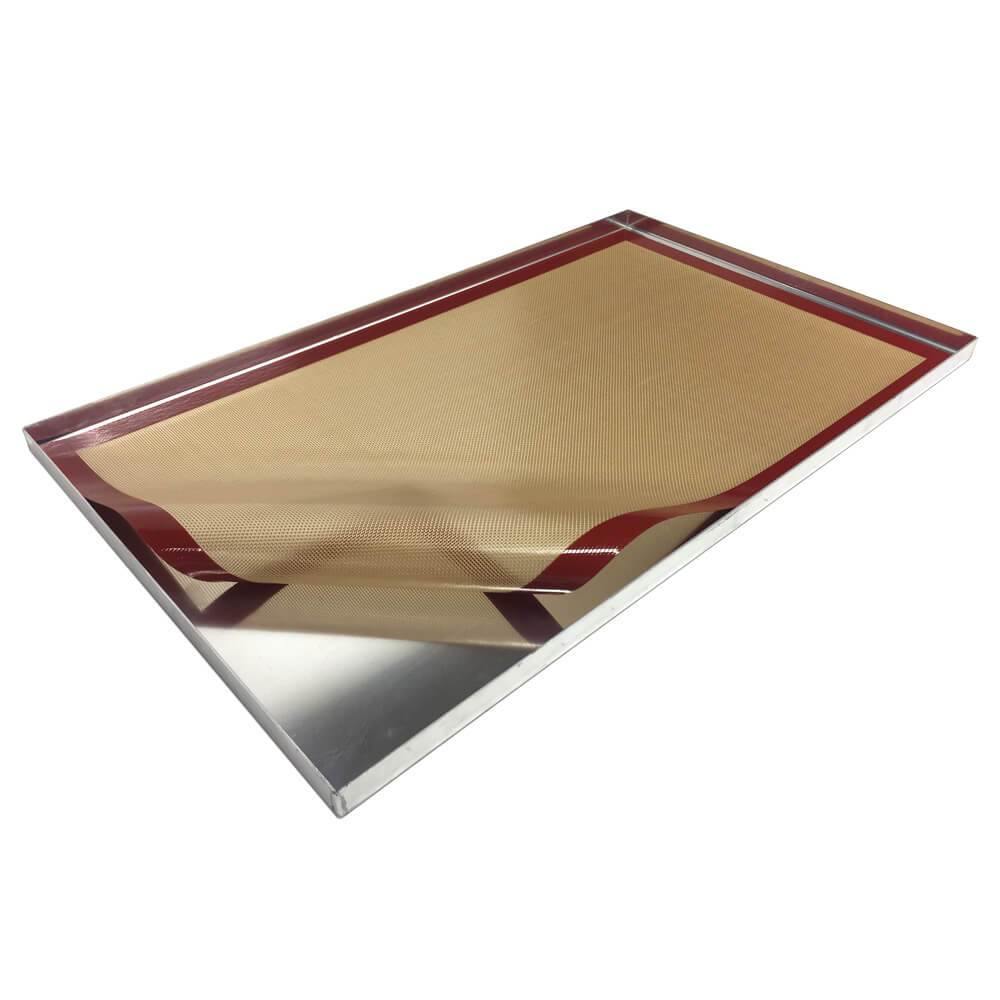
A tray of macarons stuck fast to baking paper, biscuits that spread and fuse to a greased tray, or pastry that won't come away from the worktop without a coating of flour, silicone mats solve a different set of problems to PTFE liners. They give you a flat, non-slip surface that suits delicate baking work: macarons, pastry, biscuits, and lining a tray where you don't want things sliding around. Rated from -40°C to 250°C, they go from freezer to oven, which makes them handy for make-ahead bakes as well. They are not the right choice for roasting meat, BBQ grilling, or anything high in fat, where the grease and mess are better handled by a PTFE liner. Keep silicone for the baking side of the kitchen and PTFE for the cooking side, and you'll get a longer working life out of both.
A silicone mat doesn't have to go anywhere near an oven to earn its keep, either. Its grip and non-stick surface work just as well as a worktop cover for rolling pastry, kneading dough or working fondant, no dusting of flour needed underneath, and nothing sliding around while you work it. It's worth having on the worktop even on days you're not baking anything that goes in the oven at all. One thing to leave alone, though: don't cut a silicone mat down to fit a tray. They're usually finished with a sealed, often coloured border, and cutting into that damages the mat, loses the seal and leaves the edge prone to fraying. If a mat is genuinely the wrong size, a PTFE liner is the one to trim instead. Worth trying are the Silicone Baking Mat, the Baking Mesh Mat, and the Macaron & Meringue Mat.
Getting the Temperature Right
PTFE liners are rated to 260°C at the top end. Silicone mats run from -40°C to 250°C, so they double as a freezer-safe mat as well as a baking one. The two materials sit close on maximum heat, so the real difference between cooking and baking use isn't about which runs hotter, it's about which one handles grease and roasting mess: PTFE for that, silicone for drier baking work. Check your oven, freezer or BBQ temperature against whichever you're using before you start.
Grip and Finish: A Couple of Practical Differences
PTFE's non-stick coating is slippery by nature, and that slipperiness isn't limited to how easily food releases, it can affect what's sitting on top of the liner too. Pull a tray of biscuits or a joint of meat out of the oven and turn too quickly, and things can slide, occasionally right off the liner. Silicone's grippier surface holds food in place far better, which is part of why it suits delicate, precisely piped work like macarons.
Silicone can also leave a very slight indentation pattern on the base of whatever you've baked, most noticeable on bread and biscuits. It's a minor cosmetic thing rather than anything that affects how the bake turns out, but if you want a completely smooth, glassy base, PTFE is the one that gives it.
Care and Cleaning
PTFE liners can go straight in the dishwasher, or be wiped clean and washed in warm soapy water. Silicone mats are different: hand wash only, with a damp sponge and a mild detergent, then rinse and leave to air dry. A dishwasher can damage the coating on a silicone mat, so it's worth skipping even though it seems like the easier option.
Avoid abrasive scourers and sharp utensils on both materials, and never cut food directly on a liner or mat. On silicone in particular, a cut or torn mat shouldn't be used, since the glass-fibre mesh underneath can work its way into food once the surface is broken.
PTFE liners are thin and flexible, almost like a sheet of paper, which is exactly why they roll up small. It also means a hard crease shows: a liner shoved in a drawer and pulled out creased won't lie flat in the tray, and food sticks right at that fold, undoing the reason you bought it in the first place. Store liners and mats flat or loosely rolled rather than folded, and they'll keep performing the way they should. A Silicone Storage Wrap holds any of them rolled up and out of the way, whichever liner or mat you're storing.
How Long Do They Last?
No more running to the shop mid-bake because the roll of parchment's run out, and no ongoing spend on paper you use once and bin. Looked after properly, both PTFE liners and silicone mats can be reused hundreds of times before they need replacing. Discolouration from heat and food contact is normal and doesn't affect performance. The point to actually watch for is the non-stick surface itself: once food starts catching where it used to release cleanly, or a mat has a crease that won't lie flat, that's the sign it's done its job and it's time for a new one.
Which One Do I Need?
| If you're | You want |
|---|---|
| Roasting, grilling, air frying or BBQ cooking | Cooking Liners |
| Lining a baking tray or sheet | Baking Liners |
| Lining a round, square, sponge or loaf tin | Cake & Loaf Tin Liners |
| Rolling pastry, fondant or piping icing, on or off a tray | Cake Decorating |
| Baking macarons or delicate bakes on a flat mat | Silicone Mats |
| Protecting an induction hob specifically | Our induction hob protector guide |
Frequently Asked Questions
Can I use a silicone mat for roasting meat or BBQ cooking?
It isn't the right tool for the job. Silicone mats are built for baking, not for the grease and mess of roasting or grilling. Use a PTFE cooking liner for those instead.
Can I use a silicone mat as a work surface rather than for baking?
Yes. Its grip and non-stick surface make it just as useful for rolling pastry, kneading dough or working fondant on the worktop as it is for baking on. You don't need it to go anywhere near an oven to get the benefit.
Can I cut a silicone mat down to fit my tray?
No. Silicone mats are finished with a sealed, often coloured border, and cutting into it damages the mat and risks the edge fraying. A PTFE liner is the one to trim if you need a non-standard size, since its edges are never sealed to begin with.
Do I need to remove an air fryer liner while it preheats?
Yes. Only put the liner in once there's food on top of it. Food weighs the liner down and keeps it away from the heating element; an empty liner left in during preheating can lift up, touch the element and burn, which damages both the liner and the appliance.
Can I put a liner or mat in the dishwasher?
PTFE liners can. Silicone mats can't, hand wash those instead with a damp sponge and mild detergent to avoid damaging the coating.
Can silicone mats go in the freezer?
Yes. Silicone mats are rated down to -40°C, so they can go straight from the freezer to the oven.
Can PTFE liners go in the microwave or freezer?
Yes to both. PTFE is non-reactive and doesn't heat up the way metal does, so it's safe as a liner for food being microwaved, and it also works as a non-stick surface for freezing food ahead.
How many times can I reuse a liner or mat before replacing it?
Hundreds of times under normal use, as long as it's kept within its temperature range, stored flat or rolled rather than folded, and cleaned without abrasive scourers.
What's the maximum temperature for a PTFE liner or silicone mat?
PTFE liners are rated to 260°C. Silicone mats run from -40°C to 250°C. Check your oven or BBQ temperature before using either.
Why shouldn't I fold or crease a liner or mat?
They're thin and flexible, almost like a sheet of paper. A sharp crease can make the liner stick up at that point instead of lying flat, which affects both how it looks and how well it releases food. Store flat or loosely rolled instead.
Do I need to grease a liner or mat before use?
No. Both PTFE and silicone are non-stick on their own, so oil, grease or flour underneath isn't necessary.
Bake-O-Glide® has been selling reusable, non-stick kitchenware in Britain since 1992. PTFE liners in the range are dishwasher safe; silicone mats are hand wash only.
- Choosing a selection results in a full page refresh.