Your basket is empty
Looks like you haven't added anything to your basket yet





What Is a High-Speed Oven and How Does It Cook Faster?
High-speed ovens go by several names depending on who's talking about them: rapid cook ovens, speed ovens, or accelerated cooking ovens. They're all describing the same category of equipment: commercial ovens built to cook food in a fraction of the time a standard oven takes, without the compromises of a microwave.
How they cook faster
Most high-speed ovens combine two or three cooking methods in one cavity: high-velocity hot air impingement (Merrychef calls its version "tuned impingement"), microwave energy, and in some models a grill or convection element. The hot air strips away the insulating layer of cooler air that normally sits against food in a standard oven, so heat transfers faster. Add microwave energy and you're cooking from the inside and the outside at once. Merrychef's own spec sheets put this at up to 20 times faster than a conventional oven for some dishes.
Where you'll find them
Merrychef and Turbochef are the two names most commercial kitchens will recognise, used across cafés, quick-service restaurants, forecourt food-to-go counters and hotel kitchens. They're built for speed and consistency under pressure: service running fast with food coming out the same way every time.
Why standard bakeware doesn't always fit
A high-speed oven's cavity is usually smaller and more specifically shaped than a standard oven's, built around a particular tray footprint rather than a generic shelf. That's why trays and liners for these ovens tend to be sold by model rather than by generic size, and why "Merrychef" or "Turbochef" alone isn't enough to guarantee a fit: different models within the same brand use different cavity sizes. Using the wrong size means gaps around the edges where heat and air escape the cavity unevenly, and food that cooks less consistently than the oven is capable of.
Why metal isn't an option
Because these ovens use microwave energy alongside hot air, metal trays and containers are ruled out in the same way they are in a domestic microwave. Metal can spark, damage the oven cavity, and block microwave energy from reaching the food in the first place, so standard metal bakeware cut down to size isn't a workaround, it's a genuine risk to the equipment. Anything going into a Merrychef or Turbochef needs to be microwave-safe as well as heat-resistant, which is exactly the gap PTFE trays and liners fill.
Non-stick trays and liners still matter
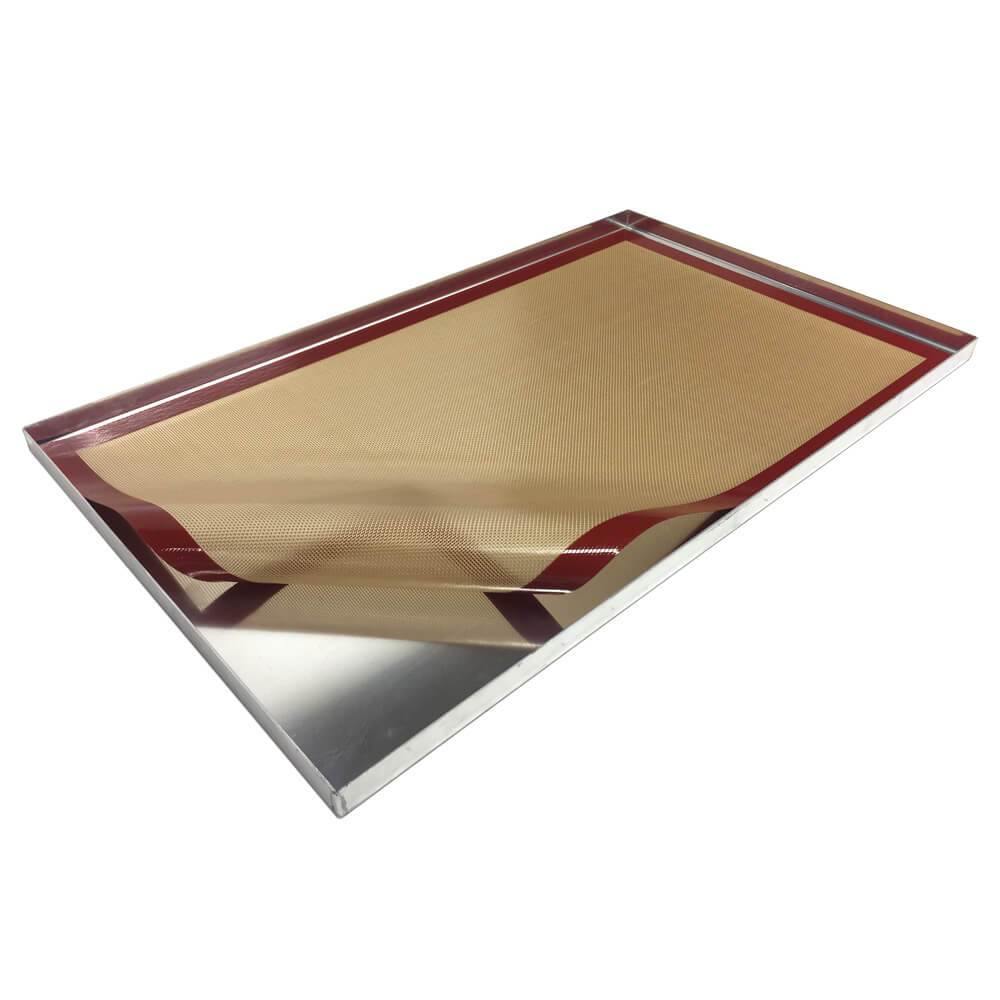
The speed of these ovens doesn't change the basic problem every kitchen has: food sticking to a hot surface. PTFE trays and liners built for this equipment give the same non-stick, reusable benefit as a standard oven liner, just cut to fit a Merrychef, Turbochef or generic high-speed oven cavity exactly.
Frequently Asked Questions
Is a high-speed oven the same as a microwave?
No. Most high-speed ovens combine microwave energy with high-velocity hot air, and sometimes a grill element, in one cavity. That combination is what lets them brown and crisp food the way a microwave alone can't.
Are "rapid cook oven" and "speed oven" the same thing?
Yes. High-speed, rapid cook, speed oven and accelerated cooking oven are different names for the same category of equipment: ovens built to cook significantly faster than a standard oven using combined heating methods.
Can I use a standard baking tray in a high-speed oven?
Only if it's non-metal and microwave-safe. A tray cut to fit the specific cavity of your oven model will also sit correctly and won't leave gaps that affect even cooking, which a generic tray can't guarantee even when the material is right.
Can I use metal trays in a Merrychef or Turbochef oven?
No, not for everyday use. These ovens use microwave energy alongside hot air, and metal can spark, damage the oven cavity, and block the microwave from reaching the food. Manufacturer guidance restricts metal containers and utensils in microwave or combination mode, which is why PTFE trays and liners are the standard choice.
- Choosing a selection results in a full page refresh.